


Discover what multi-factor authentication is and how a staged rollout can enhance security without disrupting productivity.

October 9, 2026
A security awareness training program only keeps employees prepared when its topics change with the threats they actually face each quarter. Sticking to a static annual curriculum leaves staff vulnerable to the latest attack tactics.
A single unpatched habit—an employee clicking the wrong link, trusting the wrong login page—can halt operations, expose customer data, and cost tens of thousands of dollars to clean up. Yet most businesses treat training as a once-a-year checkbox.
They set a fixed curriculum in January and revisit it eleven months later, trusting that the lessons will hold. Attackers don't work on that schedule. Their tactics shift by the week, sometimes by the day, which means a static lesson plan is often defending against threats that no longer exist.
Even a team that remembers every slide from last year's session may not recognize this year's phishing attempt, because the disguise has changed even if the underlying trick hasn't. That gap between what employees were taught and what attackers are actually doing is where breaches happen.
The fix follows directly from the problem: rotating security awareness training topics to match current threats is the only way to keep a team prepared for what's actually happening, rather than what was happening last quarter.
That urgency is showing up in budgets, too — 46% of organizations are now prioritizing investment in security awareness training, a sign of how seriously the threat landscape is being taken.
So if avoiding a preventable breach matters to your business, the place to start is rethinking how the content employees learn gets chosen in the first place.

Most companies set up a security awareness program once and revisit it on an annual clock, which feels efficient right up until it creates a blind spot. Attackers are constantly probing for new ways in, and because their methods shift quickly, a training library that doesn't shift with them leaves a team defending against last year's threats instead of this year's.
That lag becomes concrete the moment a new phishing technique or malware campaign shows up: a static curriculum won't address it until the next scheduled update, and that gap is exactly where attackers strike. Employees miss a suspicious email or a fake login page not because they weren't paying attention, but because the warning signs themselves have changed since they were trained.
The pattern repeats until training is permanently a step behind real-world risk. A business in Rochester Hills faces the identical challenge to a business anywhere else: keeping people ready for what's actually circulating now, not what was dangerous a few months back.
A dynamic approach, where topics rotate alongside the threat landscape, closes that gap directly. It means a team knows what to watch for this week, not only what a slide deck covered months ago.
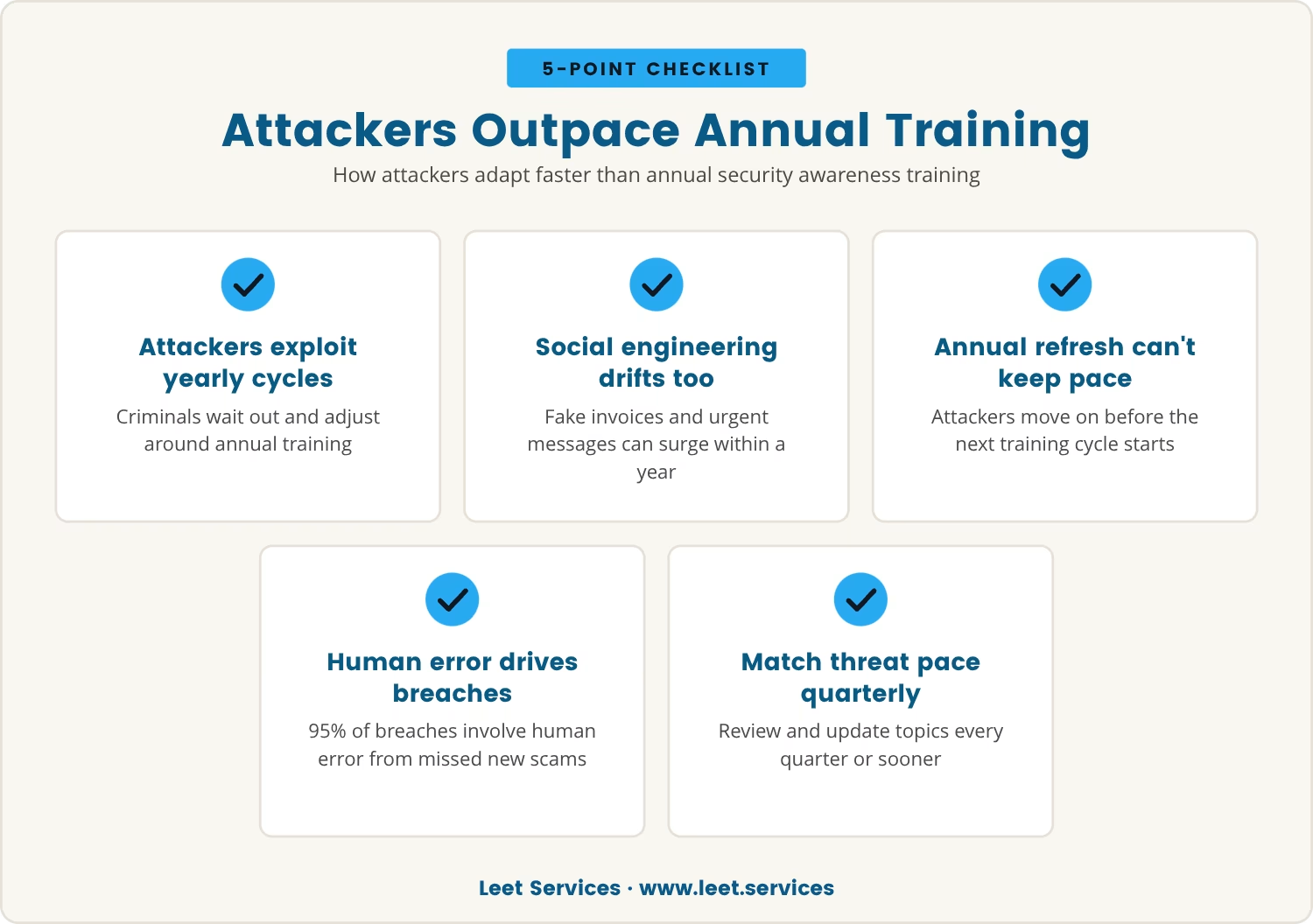
Cybercriminals are quick to spot weaknesses in business defenses, and an annual training cycle is one of the easiest patterns to spot. Once attackers notice that a company only updates its content once a year, they simply wait it out and adjust around it.
Phishing campaigns illustrate this well: they change their appearance to mimic current events or popular brands almost as fast as those events unfold. A training program still built around last year's examples leaves employees unable to place the new versions, and the same drift shows up in social engineering, where urgent messages or fake invoices that were rare last year can become common this year.
Because threats evolve that quickly, an annual refresh is structurally unable to keep pace — by the time the next cycle starts, attackers have already moved on to something else. That mismatch helps explain why 95% of breaches involve human error, often the result of an employee missing the signs of a scam that didn't exist the last time training was updated.
Closing that gap means matching the pace of the threats themselves, which in practice means reviewing and updating topics every quarter, or sooner if circumstances demand it.
Choosing the right security awareness training topics means going beyond the basics to focus on what employees are actually likely to face in the coming months. The categories below outline where that focus belongs.
Simulated emails should mirror what attackers are sending right now, not generic templates from a training vendor's library. Current examples teach employees to recognize this month's trick, not last year's.
Coverage should include the newest manipulation tactics, such as urgent requests, fake HR messages, or unexpected payment instructions. Because these shift often, the training addressing them needs to shift just as often.
Content should highlight how ransomware is spreading at the moment, whether through email attachments, malicious links, or compromised websites. As new delivery methods emerge, this material needs updating to match.
Staff need exposure to the latest password-stealing techniques, including credential phishing and fake login portals. Guidance on multi-factor authentication belongs alongside that, wherever it's available to use.
Attention should center on how attackers are currently trying to reach sensitive information, often through business email compromise or fake vendor requests. As new scams surface, these topics need to rotate in step with them.
Turning that idea into something workable means putting a structure around it rather than leaving updates to chance. The elements below show what that structure tends to include.
Together, these habits keep a team's knowledge current rather than stale. They also send a signal that security is a continuous priority rather than a box checked once a year.
That continuous priority matters because the cost of neglecting it isn't theoretical. A business relying on outdated lessons is more likely to suffer a breach, and the price tag attached to that breach can be steep — especially where remote work is involved, with costs sometimes reaching as much as $137,000 per incident.
Beyond that direct financial hit, a breach damages reputation and erodes customer trust. Clients expect their information to be protected, and a single lapse can carry consequences well past the immediate cleanup.
Outdated training carries a quieter cost, too: employees who feel unprepared for the threats they actually encounter tend to disengage, and some stop taking future training seriously at all.
A rotating awareness program addresses both costs at once. It keeps defenses current and keeps a team confident in its own ability to spot and stop an attack.
Choosing the right topics starts with a plain question about what's already happening inside the business: what suspicious emails or incidents have employees actually reported in the last quarter?
From there, working with an IT team or a trusted partner to review recent threats specific to Rochester Hills and the surrounding region makes sense, since local trends can shape which topics matter most right now.
Regulatory and industry requirements deserve a place in that review as well. Some sectors mandate specific training on data privacy or the handling of sensitive information, and rotating topics need to account for those obligations alongside the general threat picture.
Above all, the training calendar needs room to bend. If a new threat surfaces suddenly, the ability to update the curriculum before the next scheduled review is what separates an effective program from one that's merely on schedule.
Put together, all of this points to one conclusion: a security awareness program that adapts to current threats isn't a nice-to-have; it's a necessity. Attackers are counting on businesses sticking to the same lessons year after year, and rotating topics with the threat landscape is what breaks that pattern.
When training matches what's actually happening, employees are far more likely to spot and stop an attack before it does damage. That alignment builds a culture of vigilance and keeps defenses strong regardless of how tactics continue to shift.
Avoiding a preventable breach and staying ahead of attackers, then, comes down to making rotating security awareness training topics a core part of the overall strategy rather than an afterthought.

Many businesses with 15 to 80 employees find themselves relying on outdated training, unsure if their team is ready for the latest risks. At Leet Services, we understand how quickly attack methods can change and how important it is to keep your staff prepared.
If you’re ready to see how we approach rotating security awareness topics, or want to talk about your own setup, let’s connect for a conversation.
If you and your team aren’t ecstatic about choosing us during your first 30 days, let us know, and we’ll refund your entire initial investment immediately.
Reviewing and updating a security awareness training program at least every quarter keeps a team prepared for the latest threats rather than outdated ones. When a new risk appears, updating sooner than the scheduled review is worth doing.
A modern program should include current phishing techniques, social engineering tactics, safe password practices, handling of sensitive information, and any new scams targeting the relevant industry. Rotating these based on recent incidents is what keeps the content relevant.
Effectiveness shows up in metrics like the number of reported phishing attempts, quiz results following training sessions, and the frequency of security incidents overall. Improvement in these areas is a sign the training is having a real impact.
Small businesses are frequently targeted precisely because they tend to have fewer resources dedicated to cybersecurity. Security awareness training reduces the risk of human error, which remains a common cause of breaches.
Yes, many security awareness training platforms allow content to be scheduled and delivered automatically. These tools help keep a program aligned with the latest threats without adding manual work.
.avif)
My interest in technology began early, back in 1993 with a Macintosh SE. By the age of ten, I had already built my first PC, and within a few years, I was repairing and upgrading computers for people in my community. At fifteen, I started LEET Services, taking on IT work even before I was old enough to drive. A request to help a local business with their IT marked a turning point, leading me from home calls into the world of business technology.