


Learn how to create a technology roadmap that aligns with business goals, ensuring every tech initiative supports your company's strategic objectives.

November 13, 2026
A technology roadmap delivers real value only when business goals set the direction and technology choices follow. Starting with tools instead leads to wasted resources and costly rebuilds.
Most people assume building a technology roadmap is mainly about picking the right tools, but the order of decisions matters more than the decisions themselves. Businesses often choose systems first and discover only later that the choices don't fit what the company actually needs.
The cleanup then costs more time and money than the original project would have.
That's why a technology roadmap should be shaped by business goals before any technology enters the conversation. The company defines what it wants to achieve, and only then does it look at specific platforms or vendors. Skip that sequence, and the risk is clear: money goes toward solutions that look impressive on paper but solve nothing real.
Once goals come first, everyone from leadership to IT can see why a given technology was chosen and how it supports the larger picture. The investments then push the business forward instead of setting up a costly rebuild down the road.

Many organizations get excited about the latest software or hardware, and that excitement is exactly what can lead them off track before they've defined anything. Leading with business goals changes that pattern, because every step in the roadmap then has a clear purpose from the start.
Lead with tools instead, and the systems you land on may not fit your workflow or solve your biggest challenges. That mismatch creates confusion, slows down productivity, and makes it harder to adapt once the business itself changes.
Defining goals early avoids that trap by showing which technology initiatives are actually worth the time and budget. It also gives the team a way to measure progress, since every milestone ties back to a real business need rather than a feature list.
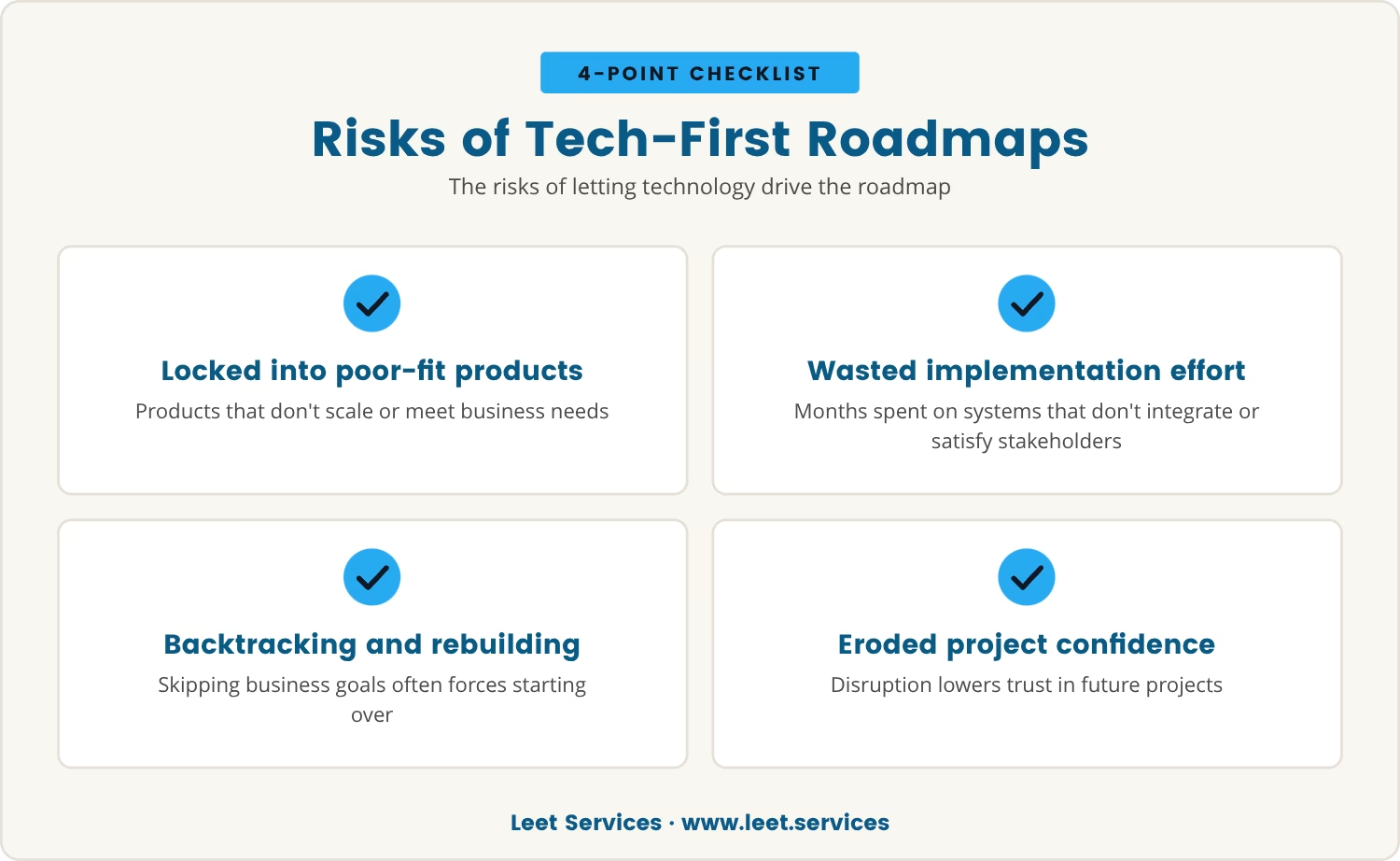
Technology choices made before business strategy carry a real cost. Companies following that path often find themselves locked into products that don't scale or support what the business actually needs.
Wasted resources tend to follow close behind. A team may spend months implementing a system, only to discover it doesn't integrate with existing processes or meet stakeholder expectations, and the cost shows up as lost time and missed opportunities, not just a line item.
In Rochester Hills and beyond, businesses that skip the business-goal step often end up backtracking, rebuilding, or starting over entirely. More disruption follows, and so does less confidence in whatever project comes next.
Knowing how to create a technology roadmap that actually delivers starts with a clear grip on business objectives before anything else. Here's the sequence that gets you there:
List the outcomes the company wants to achieve: better customer service, stronger sales, tighter operations. Keep each one specific enough that success can be measured later.
Bring in people from different departments early, since their input keeps the roadmap grounded in real needs rather than assumptions. That early involvement also heads off surprises later in the process.
Look hard at the systems and processes already in place, noting what works, what doesn't, and where the gaps sit. This step keeps you from duplicating effort or paying for tools you don't actually need.
Not every project can happen at once, so rank initiatives by how directly they support business goals and how urgent each one is. That ranking becomes the backbone of the schedule that follows.
Set a realistic timeline for each initiative, then break the larger ones into smaller milestones. Smaller pieces make progress easier to track and easier to adjust when circumstances shift.
Only once priorities are set should specific products or vendors enter the evaluation. Each choice at this stage should trace back directly to a business objective.
Business needs shift, so the roadmap has to shift with them. Regular reviews make room to adjust priorities, add new initiatives, or retire the ones that no longer earn their place.
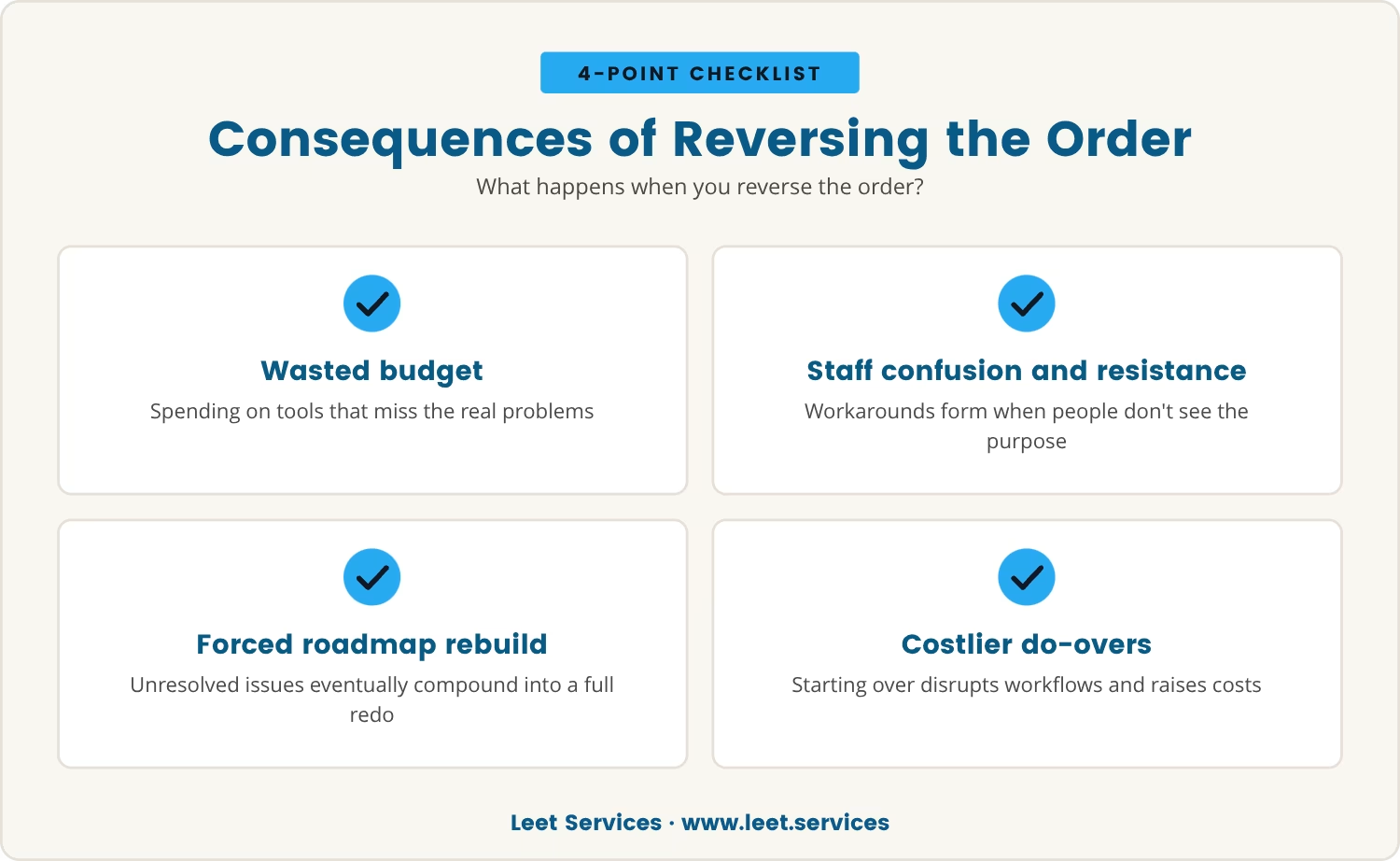
Pick technologies first and try to retrofit strategy around them, and problems start piling up fast. The most common one is wasted budget: money spent on tools that don't solve the right problems or that demand expensive customization to limp into place.
Confusion among staff tends to follow close behind. When people don't understand why a new system showed up, they resist using it or build workarounds that quietly undermine its value, which slows adoption and shrinks the return on the investment.
Left unaddressed, these issues compound until they force a complete rebuild of the roadmap. That means starting over, disrupting workflows already in motion, and spending even more to fix mistakes that better sequencing would have avoided.
A roadmap shaped by business goals delivers several advantages:
A technology roadmap is not a one-time project; it's a living document that has to move as the business does. Goals and priorities shift as a company evolves, so the roadmap needs regular updates just to stay useful.
Check in every few months to review progress and adjust plans, with stakeholders involved so new challenges or opportunities surface early rather than late. That habit keeps the roadmap aligned with business strategy even as the company grows or the market shifts underneath it.
If you're not sure where to start, ask yourself: when was the last time your technology roadmap was updated to reflect your current business goals?
Many businesses fall into the same traps when creating a technology roadmap. Here are some pitfalls worth watching for:
Build the technology roadmap around business goals, and every decision carries a clear reason behind it. That approach saves money, cuts down on frustration, and helps the business adapt as circumstances change.
Start with technology instead and try to fit it into strategy later, and the risk becomes wasted investment and a roadmap that eventually needs rebuilding from scratch. The right order isn't just a best practice - it's the difference between moving the business forward and getting stuck in place.

Many companies with 15 to 80 employees find themselves stuck with technology that doesn’t match their real needs, leading to wasted budget and slow progress. At Leet Services, we know how frustrating it is to realize your roadmap needs a complete overhaul.
If you’re ready to see how a business-driven approach can make your technology investments count, we invite you to talk with us about your current setup or learn how we guide teams through this process.
Try Leet Services risk-free—if you and your team aren’t ecstatic in your first 30 days, we’ll refund your entire initial investment immediately.
A technology roadmap should be reviewed at least every six to twelve months, since regular updates keep it aligned with changing business goals and new technology initiatives. Companies growing quickly or facing new challenges should consider more frequent check-ins.
The right stakeholders usually include leaders from IT, operations, finance, and any department affected by technology changes. A mix of perspectives captures the full range of business needs and builds buy-in across the organization.
A technology roadmap focuses on the systems and tools a business uses to support its operations and strategy, while a product roadmap outlines the development and release of new features or products for customers. Both matter, but each serves a different purpose.
Success shows up in how well the roadmap helps achieve business goals, tracked through clear metrics like improved productivity, cost savings, or faster project delivery. Reviewing these metrics regularly keeps the roadmap honest about the value it's actually delivering.
Yes, even small businesses see real benefits from a structured approach, since a formal roadmap helps prioritize investments, avoid costly mistakes, and keep every technology decision tied to business strategy. It also makes scaling the company considerably more manageable.

My interest in technology began early, back in 1993 with a Macintosh SE. By the age of ten, I had already built my first PC, and within a few years, I was repairing and upgrading computers for people in my community. At fifteen, I started LEET Services, taking on IT work even before I was old enough to drive. A request to help a local business with their IT marked a turning point, leading me from home calls into the world of business technology.